
Digital gambling now moves billions of dollars each year through mobile phones, much of it through platforms that operate outside formal regulation. These apps rely on frequent, low-cost wagers that feel harmless on their own. Over time, those small bets quietly reshape how money flows through local economies.
Many players first encounter these platforms through social media ads, referral links, or simple sign-up pages like mzplay register, which promise quick access and instant play. The process feels casual, almost game-like. What often goes unnoticed is where that money goes after it leaves a user’s wallet.
Micro-bets and the illusion of affordability
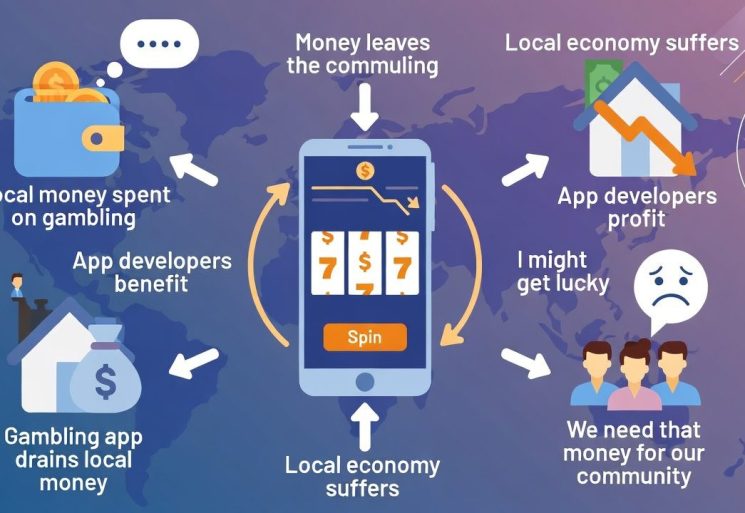
Unregulated gambling apps are built around repetition. Instead of encouraging large wagers, they push constant action. A few pesos here, a few coins there. Individually, the losses feel manageable. Over weeks or months, they add up.
Economists call this leakage. Disposable income that might have gone to food stalls, transport, entertainment, or savings is slowly redirected into digital platforms. Because the spending is fragmented, users rarely track the total cost. The result is less money circulating within neighborhoods and small businesses.
Money out, little coming back
Licensed gambling operators usually pay taxes, hire local staff, and support compliance systems. Unregulated apps do not. Revenue is often routed offshore through payment processors or shell companies. That means local governments collect no gaming taxes, no licensing fees, and no compliance penalties.
For communities, this creates a one-way flow. Money leaves households but does not return as public services, infrastructure, or employment. Over time, that gap becomes visible in places where consumer spending supports daily survival.
The missing layer of jobs and services
Traditional entertainment sectors generate work. Casinos, arcades, and even small gaming halls require security, maintenance, customer support, and management. Unregulated apps run lean. Many rely on automated systems and outsourced labor.
This model produces very few local jobs. Customer complaints are handled through chatbots or overseas call centers. Disputes go unresolved. When problems arise, there is no physical office, no regulator, and no consumer advocate to contact.
Household stress becomes a community issue
Financial pressure does not stay private. When players lose money consistently, household budgets tighten. Rent, utilities, and school expenses compete with the urge to recover losses. This strain often spills into family relationships and workplace productivity.
Local lenders and informal credit systems feel the impact next. Missed payments rise. Emergency borrowing increases. What started as entertainment becomes a source of broader financial instability, affecting people who never placed a bet.
Why regulation matters beyond the player
Regulation is often framed as personal protection, but its economic role is wider. Rules force platforms to disclose odds, protect balances, and limit predatory mechanics. They also ensure contributions to public funds.
Without oversight, apps modeled after platforms such as MZPlay operate with few constraints. Bonus systems encourage rapid reinvestment. Withdrawal delays keep money locked inside the app. Each design choice favors extraction over sustainability.
READ ALSO: How Progressive Jackpots Work (And Why They’re So Popular)
A quiet drain that is easy to miss
The harm caused by unregulated gambling apps rarely makes headlines. There are no sudden closures or mass layoffs. The effect is slow, steady, and dispersed. A little less spending at local shops. A little more debt at home.
Because the activity happens on personal devices, it feels isolated. In reality, thousands of similar decisions across a city or region can weaken local economic resilience.
Looking beyond the screen
Understanding the impact of unregulated betting requires zooming out. Each tap represents money redirected away from local circulation. Each unchecked platform represents lost public revenue.
When people consider options like mzplay register, the decision seems individual. The outcome is collective. Unregulated betting doesn’t just affect players, it affects communities.